

Choosing between single and double garage doors affects functionality, cost, and home value. Standard garage door widths follow industry conventions, but understanding these measurements helps homeowners make informed decisions. This comparison explores dimensions, applications, and considerations for both options.
Proper garage door sizing ensures vehicles fit comfortably while maximizing available space. Additionally, door width impacts installation costs, energy efficiency, and curb appeal. Therefore, evaluating your specific needs before purchasing prevents costly mistakes.
Standard Single Garage Door Dimensions
Single garage doors typically measure 8 to 10 feet wide. The most common width is 9 feet, accommodating standard vehicles with adequate clearance. Height usually measures 7 to 8 feet, with 7 feet being most prevalent in residential applications.
Older homes may feature 8-foot-wide single doors, which prove tight for modern vehicles. Trucks, SUVs, and crossovers often measure 6 to 7 feet wide including mirrors. Therefore, a 9-foot door provides safer entry without mirror damage risks.
Custom single doors range from 8 to 12 feet wide depending on garage configuration. However, widths exceeding 10 feet become structurally challenging for single-panel designs. Manufacturers may recommend double doors for wider openings to ensure proper balance and operation.
Height variations accommodate different vehicle types and storage needs. Standard 7-foot heights suit sedans and compact cars perfectly. Eight-foot heights provide clearance for vehicles with roof racks or recreational equipment.
Standard Double Garage Door Dimensions
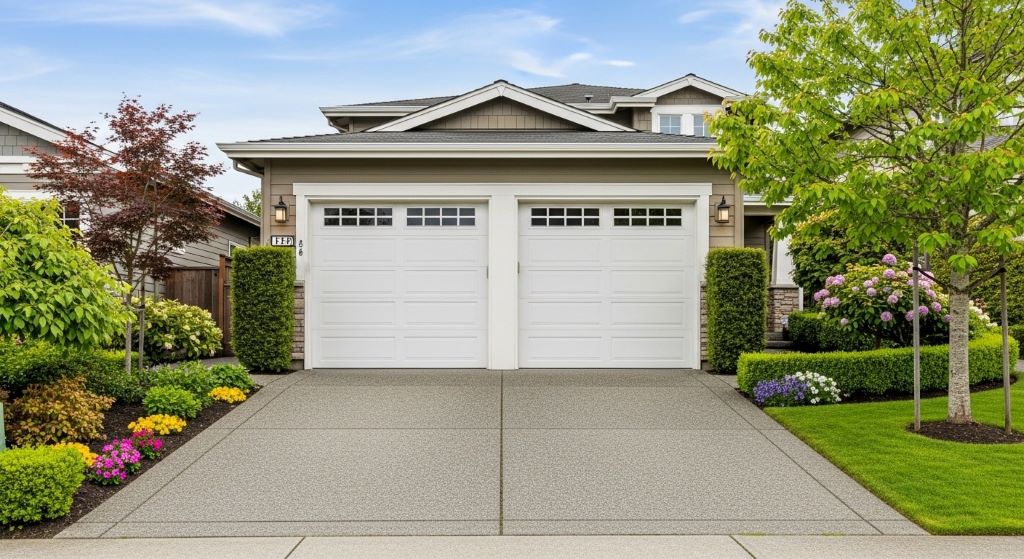
Double garage doors typically measure 12 to 18 feet wide. The standard width is 16 feet, providing space for two average-sized vehicles. This dimension allows comfortable access for both drivers without coordination difficulties.
Height remains consistent at 7 to 8 feet for most residential applications. Commercial double doors often reach 10 to 12 feet accommodating larger vehicles. However, residential needs rarely require these extended heights.
The 16-foot standard width divides into two 8-foot sections when the door opens. This balanced design distributes weight evenly across the opening mechanism. Additionally, sectional panels fold smoothly without structural strain.
Wider double doors measuring 18 feet suit homes with oversized garages or vehicle collections. These accommodate larger trucks, boats, or recreational vehicles alongside standard cars. Moreover, extra width provides workspace between parked vehicles.
Measuring Your Garage Opening Accurately
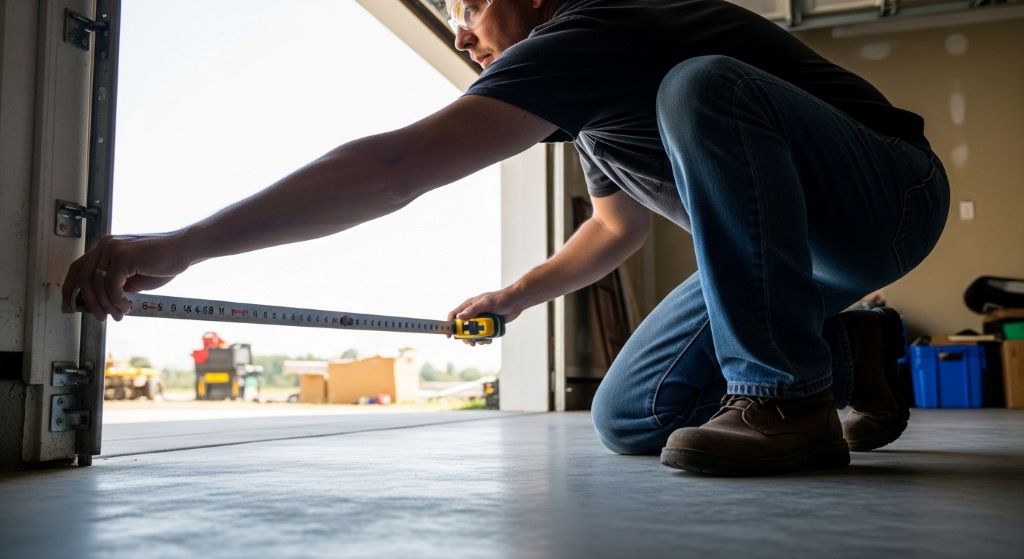
Measure the width of your garage opening at three points for accuracy. Check dimensions at the top, middle, and bottom of the opening. Use the smallest measurement when ordering doors to ensure proper fit.
Measure height similarly at both sides and the center. Uneven measurements indicate settling or structural issues requiring correction before installation. Therefore, addressing foundation problems prevents future door operation difficulties.
Record headroom, which is the space between the opening top and ceiling. Minimum headroom requirements typically range from 10 to 12 inches. Track systems and door mechanisms occupy this crucial space.
Measure side room on both sides of the opening. Standard installations require 3.75 to 4 inches for vertical track mounting. However, low-headroom or specialty systems may have different clearance needs.
According to This Old House, accurate measurements are critical because even small errors can prevent proper door installation and operation.
Comparing Vehicle Accommodation Capabilities
Single garage doors accommodate one vehicle with varying comfort levels. A 9-foot door suits compact cars, sedans, and small SUVs adequately. However, full-size trucks and extended-cab pickups require careful alignment during entry.
Modern vehicles continue growing in size, with average widths increasing steadily. Therefore, 8-foot single doors feel cramped for contemporary vehicles. Nine-foot widths provide the minimum comfortable clearance for current market offerings.
Double garage doors easily accommodate two standard vehicles simultaneously. Sixteen-foot widths allow approximately 8 feet per vehicle when parked efficiently. Additionally, space remains for opening doors without hitting adjacent vehicles or walls.
Consider future vehicle purchases when selecting door widths. Families upgrading to larger vehicles may outgrow single-door garages. Moreover, electric vehicles and their charging equipment increasingly influence garage space planning.
Evaluating Installation and Material Costs
Single garage doors cost significantly less than double doors in materials and installation. Average single door prices range from 500 to 2000 dollars depending on materials. Steel doors occupy the lower end, while custom wood doors command premium prices.
Installation labor for single doors typically costs 300 to 500 dollars. The smaller size requires less time and fewer installation challenges. However, prices vary regionally and with installer experience levels.
Double garage doors cost 750 to 3500 dollars for materials alone. The larger size requires more raw materials and reinforced construction. Additionally, premium features like insulation and windows increase costs proportionally.
Installation labor for double doors ranges from 500 to 800 dollars. The increased weight demands additional workers and installation time. Therefore, total project costs for double doors roughly double single door expenses.
Assessing Energy Efficiency Differences
Larger garage doors naturally lose more conditioned air than smaller ones. Double doors present greater surface area for heat transfer and air leakage. However, insulation quality matters more than door size for energy performance.
Insulated garage doors contain polyurethane or polystyrene foam between steel panels. R-values ranging from R-8 to R-18 indicate insulation effectiveness. Higher R-values provide better temperature control but increase initial costs.
Weather stripping around door perimeters prevents air infiltration. Quality seals maintain effectiveness longer, saving energy over door lifespans. Additionally, bottom seals prevent drafts along garage floors.
Single doors may achieve slightly better energy efficiency per square foot. However, properly insulated double doors perform adequately for most climates. Therefore, focus on insulation quality rather than door quantity when prioritizing energy savings.
Understanding Structural and Space Requirements
Single garage doors require less structural support than double configurations. Wall studs and headers handle smaller loads more easily. Therefore, retrofit installations prove simpler in existing structures.
Double doors demand reinforced headers spanning wider openings. The increased weight necessitates stronger framing members and potentially additional support posts. Moreover, older homes may require structural upgrades before installation.
Ceiling height affects door type selection significantly. Low ceilings limit track options, sometimes precluding certain door styles. Standard installations need 10 to 12 inches of headroom above openings.
Side clearances accommodate vertical track systems and hardware. Insufficient side room restricts door type choices to specialty low-clearance systems. However, these alternatives typically cost more than standard configurations.
Comparing Operational Mechanisms and Maintenance
Modern garage doors operate via torsion spring, extension spring, or jackshaft systems. Single doors use lighter-duty components appropriate for their reduced weight. Maintenance intervals extend longer due to less mechanical stress.
Double doors require heavier springs and more robust opening mechanisms. Torsion springs balance larger door weights effectively but require professional adjustment. Additionally, automatic openers must provide adequate horsepower for smooth operation.
Routine maintenance includes lubricating moving parts, tightening hardware, and testing safety features. Double doors have more components requiring attention during maintenance sessions. Therefore, annual service may cost slightly more than single door maintenance.
Spring replacement represents the most common major repair. Double door springs handle greater tension and may wear faster. However, quality springs from reputable manufacturers provide comparable lifespans regardless of door size.
According to Forbes, regular maintenance extends garage door lifespans from 15 to 30 years while preventing costly emergency repairs.
Analyzing Impact on Home Value and Curb Appeal
Garage door style dramatically affects home curb appeal and perceived value. Double doors create symmetrical facades that many buyers prefer. Additionally, two-car garages represent standard expectations in many housing markets.
Single-door garages may signal smaller homes or limited storage space. Buyers seeking two-car garages specifically filter listings accordingly. Therefore, single doors potentially limit buyer pools in competitive markets.
Architectural style influences appropriate door selection. Traditional homes often feature side-by-side double doors matching design aesthetics. However, contemporary designs sometimes incorporate multiple single doors for visual interest.
Door material and design quality matter more than configuration alone. Premium materials like wood or carriage-style doors enhance appeal regardless of width. Moreover, coordinating door styles with home architecture maximizes curb appeal impact.
Considering Future Flexibility and Usage
Single garage doors limit future space reconfiguration options. Converting single-door garages to workshops or storage areas works well. However, accommodating additional vehicles requires structural expansion.
Double doors provide flexibility for changing vehicle needs over time. Families can park compact cars together or single large vehicles centrally. Additionally, workspace remains available alongside parked vehicles.
Consider non-vehicle garage uses when selecting door widths. Home gyms, workshops, and hobby spaces benefit from double door access. Large equipment and materials enter more easily through wider openings.
Property value considerations extend beyond immediate needs. Homes with two-car garages typically command higher resale values. Therefore, investing in double doors may provide returns during future sales.
Making the Decision Based on Your Specific Needs
Evaluate current and projected vehicle ownership patterns first. Households with one vehicle may manage perfectly with single doors. However, two-vehicle families require double doors for practical daily use.
Consider available garage footprint and structural constraints. Existing openings may dictate door sizes without expensive modifications. Additionally, budget limitations might necessitate single door selection initially.
Analyze long-term plans for the property and vehicles. Short-term homeowners might prioritize cost savings with single doors. Conversely, long-term residents benefit from investing in appropriately sized double doors.
Consult professional installers about specific property requirements before deciding. Experienced contractors identify structural concerns and recommend optimal solutions. Moreover, professional input prevents costly mistakes and ensures code compliance.
Conclusion
Comparing single and double garage door widths involves evaluating dimensions, costs, and functional requirements. Single doors measuring 8 to 10 feet suit one-vehicle households and cost less initially. Double doors spanning 12 to 18 feet accommodate two vehicles while enhancing property value. Therefore, decisions should consider current needs, future flexibility, and budget constraints. Proper measurements, professional installation, and quality materials ensure satisfactory performance regardless of configuration selected. The right garage door width balances practical functionality with long-term home value preservation.
Frequently Asked Questions
What is the most common garage door width for residential homes?
The most common residential garage door width is 16 feet for double doors and 9 feet for single doors. These standard dimensions accommodate typical vehicles while fitting most garage openings. However, custom widths are available for specific needs.
Can I replace a single garage door with a double door?
Yes, but this requires significant structural modifications including removing the center wall, installing a reinforced header, and potentially adding support beams. The project costs several thousand dollars beyond the door price itself. Consult structural engineers before attempting this conversion.
How much clearance do I need on each side of my vehicle in the garage?
Experts recommend at least 2 to 3 feet of clearance on each side of your vehicle for comfortable door opening and walking space. This means a 6-foot-wide vehicle needs a minimum 10-foot-wide garage door opening for adequate clearance.
Do double garage doors cost twice as much as single doors?
Double garage doors typically cost 1.5 to 2 times more than single doors, not exactly double. While materials increase proportionally, installation costs don’t fully double. Overall project costs range from 50 to 100 percent more for double versus single configurations.
What garage door width do I need for a full-size pickup truck?
Full-size pickup trucks require minimum 9-foot single garage door widths, though 10 feet provides more comfortable clearance. Extended cab or dually trucks may need 10 to 12-foot openings. Measure your specific vehicle including mirrors before ordering doors.
Related Topics:
Breaking the Mold: A Guide to Custom Garage Door Sizes in the USA
Decoding Garage Door Dimensions: Your Guide to Standard Sizes and Beyond