


Storing seasonal clothes without a closet presents unique challenges, especially for those living in small spaces or homes lacking built-in storage. With urban living on the rise—over 56% of the global population lived in urban areas in 2024, according to the United Nations—space-saving solutions are more relevant than ever. This article explores the history, current practices, key concepts, benefits, challenges, and future trends of storing seasonal clothes without a closet, offering practical and innovative solutions for maximizing space while keeping garments in pristine condition.
History of Clothing Storage
Early Practices
Before modern closets became standard in homes, clothing storage relied on furniture and portable solutions:
-
Chests and Trunks: In medieval Europe, wooden chests stored garments, often lined with cedar to repel moths. These were bulky but portable, doubling as seating or tables.
-
Wardrobes and Armoires: By the 17th century, freestanding wardrobes emerged, offering vertical storage for wealthier households. These were often ornate, reflecting status.
-
Seasonal Rotation: Pre-industrial societies rotated clothing based on seasonal needs, storing winter furs or summer linens in attics or under beds to free up space.
Evolution to Modern Times
The concept of the closet as a dedicated clothing storage space didn’t become widespread until the 20th century:
-
Urbanization and Space Constraints: As urban populations grew, smaller living spaces prompted innovative storage solutions like under-bed storage and vacuum-sealed bags.
-
Technological Advances: The invention of plastic storage bins in the mid-20th century and vacuum-seal technology in the 1990s revolutionized compact storage.
-
Minimalist Movement: By the 2010s, the rise of minimalism and capsule wardrobes encouraged efficient storage methods, reducing the need for large closets.
Current State of Seasonal Clothing Storage
Today, storing seasonal clothes without a closet is a necessity for many, driven by space limitations and lifestyle changes. According to a 2024 survey by Apartment Therapy, 62% of renters in urban areas lack adequate closet space, pushing demand for creative storage solutions. Current methods combine functionality, aesthetics, and sustainability:
-
Multi-functional Furniture: Beds with built-in drawers or ottomans with hidden compartments are popular.
-
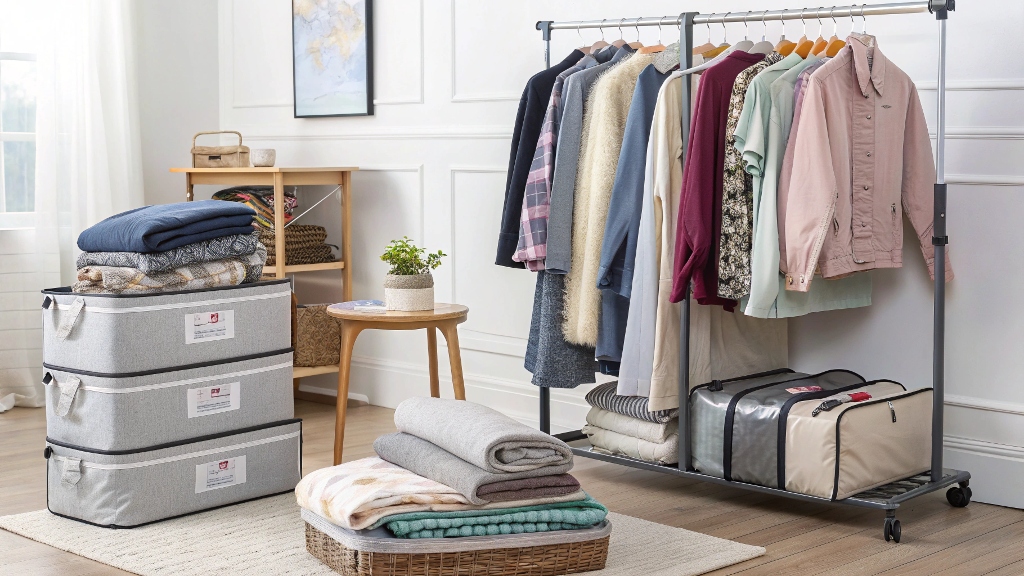
Modular Systems: Stackable bins, rolling racks, and wall-mounted shelves offer flexibility.
-
Eco-friendly Materials: Bamboo storage boxes and recycled plastic bins align with growing environmental consciousness.
Key Concepts for Storing Seasonal Clothes Without a Closet
Space Optimization
Maximizing limited space requires strategic planning:
-
Vertical Storage: Use wall shelves, over-door hooks, or tall shelving units to leverage vertical space.
-
Example: Install floating shelves above a desk to store folded sweaters in decorative baskets.
-
-
Underutilized Areas: Under-bed storage or behind furniture can house flat bins or vacuum-sealed bags.
-
Example: Use slim, wheeled under-bed boxes for easy access to off-season coats.
-
-
Multi-purpose Items: Choose furniture like storage ottomans or benches that serve dual purposes.
Garment Preservation
Protecting clothes from damage is critical:
-
Moisture Control: Use silica gel packets or dehumidifiers to prevent mold and mildew, especially in humid climates.
-
Example: Place cedar blocks in storage bins to repel moths naturally.
-
-
Fabric-Specific Care: Store delicate items like wool or silk in breathable cotton bags to avoid trapped moisture.
-
Labeling: Clearly label containers to avoid rummaging, which can damage clothes.
Accessibility
Ensure seasonal clothes are easy to retrieve when needed:
-
Rotation Schedules: Store winter clothes in harder-to-reach spots during summer and vice versa.
-
Clear Containers: Transparent bins or labeled boxes simplify identifying contents.
-
Portable Solutions: Rolling racks or collapsible bins allow flexibility for renters or frequent movers.
Benefits of Closet-Free Storage
-
Cost Savings: Avoiding closet renovations or larger homes reduces expenses. For example, a custom closet system can cost $1,000–$5,000, per HomeAdvisor (2024).
-
Flexibility: Modular solutions adapt to different living spaces, ideal for renters or those in temporary housing.
-
Aesthetic Appeal: Creative storage like decorative baskets or open racks can enhance room design.
-
Sustainability: Repurposing furniture or using eco-friendly storage reduces environmental impact.
-
Decluttering: Seasonal rotation encourages minimalism, with 48% of Americans reporting reduced stress from organized spaces, per a 2024 National Association of Professional Organizers survey.
Challenges of Closet-Free Storage
-
Space Limitations: Small apartments (e.g., under 500 sq. ft.) often lack room for bulky storage units.
-
Solution: Opt for slim, stackable bins or vacuum-sealed bags to reduce volume.
-
-
Environmental Factors: Humidity, pests, and dust can damage clothes without proper protection.
-
Solution: Use airtight containers and natural pest repellents like lavender sachets.
-
-
Aesthetic Clutter: Exposed storage can look messy if not styled intentionally.
-
Solution: Choose matching containers or decorative covers to maintain a cohesive look.
-
-
Time Investment: Organizing and rotating clothes requires planning and effort.
-
Solution: Create a seasonal checklist to streamline the process.
-
Comparison of Storage Solutions
|
Storage Method |
Pros |
Cons |
Best For |
|---|---|---|---|
|
Under-Bed Storage |
Space-saving, discreet, affordable |
Limited capacity, hard to access |
Small apartments, flat items |
|
Vacuum-Sealed Bags |
Compact, protects from moisture/pests |
Can wrinkle clothes, not breathable |
Bulky items like coats |
|
Rolling Racks |
Easy access, portable, stylish |
Takes floor space, exposed to dust |
Temporary or open-plan spaces |
|
Stackable Bins |
Modular, customizable, durable |
Can be bulky, less aesthetic |
Long-term storage, organization |
|
Wall-Mounted Shelves |
Maximizes vertical space, decorative |
Installation required, weight limits |
Small rooms, folded clothes |
Future Trends in Closet-Free Storage
Smart Storage Solutions
-
IoT-Enabled Organizers: By 2026, smart storage systems with inventory-tracking apps are expected to gain traction, per a 2024 TechCrunch report. These allow users to catalog clothes digitally.
-
Foldable Furniture: Innovations like collapsible wardrobes or modular cubes are projected to grow in popularity, especially in micro-apartments.
Sustainable Materials
-
Biodegradable Containers: Companies like IKEA are developing storage made from recycled or plant-based materials, reducing plastic use.
-
Rental Storage Services: Services like Clutter and MakeSpace, which offer off-site storage with on-demand retrieval, are expanding, with a 15% market growth in 2024 (IBISWorld).
Minimalist and Modular Designs
-
Capsule Wardrobes: The trend of owning fewer, versatile pieces reduces storage needs, with 30% of millennials adopting capsule wardrobes in 2024 (YouGov).
-
Customizable Systems: Brands like Elfa and California Closets are introducing modular, closet-free systems that adapt to non-traditional spaces.
Review: Top Storage Products (2024)
-
Yamazaki Home Tower Storage Rack: A sleek, open-frame rack ideal for small spaces. Pros: Stylish, portable; Cons: Limited weight capacity ($80–$120).
-
Ziploc Space Bags: Vacuum-sealed bags for compact storage. Pros: Affordable, moisture-proof; Cons: Not ideal for delicate fabrics ($10–$20 for 6).
-
The Container Store Under-Bed Bins: Clear, wheeled bins for easy access. Pros: Durable, transparent; Cons: Low clearance limits use ($30–$50).
-
IKEA Kallax Shelving Unit: Versatile cube storage for folded clothes. Pros: Customizable, budget-friendly; Cons: Assembly required ($70–$200).
5 FAQs About Storing Seasonal Clothes Without a Closet
-
What’s the best way to prevent moth damage in stored clothes?
-
Use natural repellents like cedar blocks or lavender sachets. Store clothes in airtight containers and clean them before storage to remove food particles that attract pests.
-
-
How can I store clothes in a humid climate?
-
Use silica gel packets or a small dehumidifier in storage areas. Opt for breathable cotton bags for delicate fabrics and vacuum-sealed bags for non-delicates.
-
-
Are vacuum-sealed bags safe for all clothing types?
-
They’re great for bulky items like coats but can wrinkle or damage delicate fabrics like silk. Use breathable bags for delicate items.
-
-
How often should I rotate seasonal clothes?
-
Rotate twice a year (spring/summer and fall/winter). Check stored clothes every 3–4 months for signs of moisture or pests.
-
-
Can I store clothes in a garage or attic?
-
Only if the area is climate-controlled. Use airtight containers to protect against temperature fluctuations and pests.
-
Read More Also: Floating Shelf Alternatives for Heavy Decor
Conclusion
Storing seasonal clothes without a closet is both a practical necessity and an opportunity for creativity. From historical trunks to modern vacuum-sealed bags, the evolution of storage reflects changing lifestyles and technological advancements. By leveraging space-saving techniques, prioritizing garment preservation, and embracing future trends like smart storage and sustainable materials, anyone can maintain an organized, functional wardrobe without a closet. The key is to balance accessibility, protection, and aesthetics while adapting to personal space constraints. With the right tools and strategies, closet-free storage can be efficient, cost-effective, and even stylish.