


A front door that looks perfect in a showroom can fail within two winters on a west-facing wall in Kerry or Galway. Choosing the Right Front Door for Irish Weather starts with one question: can this door handle driving rain, constant damp, and Atlantic wind for twenty years?
Quick answer: Pick a door with a certified weather rating, a thermal-broken aluminium or timber frame, and drainage at the threshold. Solid timber and uPVC both work, but the frame, seals, and installation matter more than the leaf material. Expect to pay more for proper weatherproofing, and budget for a sheltered porch or canopy.
This guide explains what Irish weather does to doors, which materials survive best, and the mistakes that cause leaks, draughts, and swelling. You will finish knowing exactly what to specify before you buy.
What is Choosing the Right Front Door for Irish Weather?
It is the process of matching a door’s materials, seals, and installation to the specific conditions of an Irish home. Ireland sits in a wet, windy, maritime climate. Rain often arrives sideways, humidity stays high for months, and coastal areas add salt spray to the mix.
A door that works in a dry, sheltered location may struggle on an exposed hillside. Wind-driven rain pushes water into joints and around seals. Constant damp makes timber swell and cheap hinges corrode. Low winter sun and frequent cloud cover also affect how much a door expands and contracts.
The key factors break down into four areas:
- Water resistance: how well the door sheds rain and drains any water that gets past the outer face.
- Wind performance: whether the frame and leaf stay rigid in gusts, especially on exposed sites.
- Thermal efficiency: a U-value tells you how much heat escapes. Lower is better.
- Durability: how the finish, hardware, and seals hold up over ten to twenty years of damp air.
The climate conditions that matter most
Three conditions do most of the damage. First, wind-driven rain reaches parts of a door that vertical rain never touches, including the bottom seal and hinge side. Second, high humidity keeps timber damp, which encourages swelling and, eventually, rot. Third, salt spray accelerates corrosion on coastal homes, attacking hinges, handles, and fixings.
A door facing the prevailing wind and rain will always take more punishment than a sheltered one. That single fact should shape your budget and your material choice.
Why “weatherproof” is not a single standard
There is no single Irish label that says “this door survives here.” Instead, buyers should look for recognised testing. Thermal performance is usually quoted as a U-value, and weather resistance can be tested against wind and water standards such as those used by the British and European door industries. Ask your supplier for test evidence rather than taking a brochure claim at face value.
Ask where a door was tested. A model rated on a sheltered test rig may behave very differently on a storm-battered wall, so check whether the supplier’s warranty excludes exposed or coastal locations.
Takeaway: treat climate, exposure, and test evidence as the three things you check first, before style or price.
Why Choosing the Right Front Door for Irish Weather matters
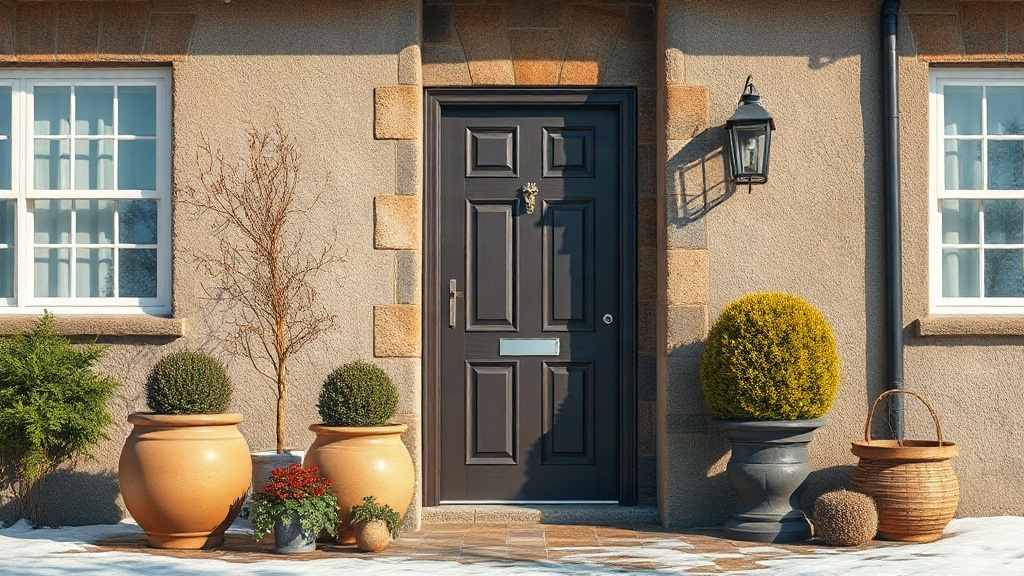
A front door is one of the few parts of a house that faces the weather on all sides at once. It is also the largest opening in your home’s thermal envelope. Get it wrong, and you feel the consequences daily.
Comfort and energy bills
A poorly sealed door lets cold air in and warm air out. That shows up as a draught at your ankles, a cold hall, and higher heating costs. A door with a good U-value and tight seals keeps the hallway warmer and reduces heat loss. The improvement is most noticeable in older homes where the original door was never designed for modern insulation standards.
Damage that spreads quietly
Water gets into a door slowly. It seeps behind the frame, under the threshold, or into the bottom rail of a timber door leaf. By the time you notice a stain or a sticking door, the damage often extends into the surrounding wall. Repairing a rotten frame or damp patch usually costs far more than choosing a better door first.
Security in a storm
A door that flexes in high wind can strain its locks and hinges. Storm damage can leave a door misaligned and easier to force. A rigid frame and quality multi-point locking help the door stay secure when the weather turns rough.
The coastal and exposed-site factor
Homes within a few kilometres of the coast face salt-laden air that corrodes standard hardware quickly. Exposed rural sites face stronger, more persistent wind. Both demand a higher specification than a townhouse on a sheltered street. Ignoring this is one of the most expensive shortcuts.
Some door warranties explicitly exclude coastal exposure or sites above a certain wind-load level. Read the small print before you order, because a claim you assumed was covered may be refused.
Takeaway: the door’s real value shows up in warmth, lower repair bills, and security during storms, not just in how it looks.
Best practices
The right door comes from a sensible specification, not a lucky guess. Follow these practices and you cover the areas that cause most failures.
Match the material to the exposure
Aluminium doors with a thermal break resist water and rot, and they keep their shape in wind. They suit exposed and coastal sites well. uPVC doors offer good value and need little maintenance, though quality varies widely, so check the frame reinforcement and seals. Timber doors look warm and traditional, but demand a durable hardwood or engineered core, a proper finish, and regular upkeep. Composite doors combine a timber-style look with a stable core, and they cope well with damp.
Insist on a drained threshold
The threshold is where most leaks start. Specify a threshold with a drainage channel and a raised upstand, so any water that gets past the outer seal drains outward. Check that the door has a weather bar and that the bottom seal actually compresses on the cill.
Get the seals and hardware right
Brush seals, compression gaskets, and a multi-point locking system all help. On coastal homes, ask for stainless steel or marine-grade hinges and fixings. Standard screws and hinges corrode fast in salt air, and a corroded hinge can drop the door within a few years.
Plan for shelter and overhang
A canopy or porch keeps direct rain off the door and extends its life significantly. If your entrance is fully exposed, that shelter is worth more than an upgrade to a fancier leaf. Even a small overhang reduces how much water reaches the seals.
Comparison: main door materials for Irish homes
| Material | Weather resistance | Maintenance | Best for |
|---|---|---|---|
| Aluminium (thermal break) | High | Low | Exposed and coastal sites |
| uPVC | Good (quality varies) | Low | Sheltered homes on a budget |
| Timber (engineered) | Good with proper finish | Medium to high | Traditional look, sheltered or sheltered-plus-canopy locations |
| Composite | Good | Low | All-round residential use |
Notice that no option is best everywhere. The frame and seals often matter more than the leaf material itself.
Choose a qualified installer
A fine door in a poor frame still leaks. Ask for a registered installer and a written specification covering the frame, seals, threshold, and fixings. Confirm the warranty in writing, including any exposure limits.
Takeaway: specify the threshold, seals, hardware, and installer as carefully as you choose the door itself.
Common mistakes to avoid
Most door failures trace back to a handful of avoidable errors. Here are the ones that cost Irish homeowners the most.
Buying on looks alone
A door chosen in a warm showroom may never have faced sideways rain. Always ask about test data and weather performance before you fall for a finish or colour.
Ignoring exposure and orientation
A door on a wind-battered, west-facing wall needs a tougher specification than one under a porch on a sheltered street. Many buyers apply the same budget and material to very different situations.
Skipping the warranty details
Warranties often exclude coastal locations, poor installation, or lack of maintenance. Buyers often discover this only when a problem appears. Read the terms and confirm the door is covered for your site.
Neglecting maintenance on timber
Timber doors need re-coating every couple of years in Ireland’s damp climate. Skipping that schedule lets water into the grain, which leads to swelling, cracking, and rot. Treat maintenance as part of the cost, not an optional extra.
Poor installation and sealing
Gaps around the frame, missing mastic, or a badly fitted threshold let water in regardless of door quality. Snag the job carefully and check for draughts and leaks in the first wet spell.
Test a new door during heavy rain by checking for damp at the threshold and around the frame. Catching a small leak early is far cheaper than repairing rot later.
Takeaway: most damage comes from exposure, damp, and installation gaps. Getting these three right saves you the cost of a poorly fitted door, a corroded hinge, or a swollen timber leaf..
FAQ
How much should I budget for a weatherproof front door in Ireland?
Prices vary widely by material, size, and specification, so there is no single figure. Expect aluminium and quality composite doors to cost more than basic uPVC. Treat the threshold, seals, and installation as part of the price, not extras.
Is uPVC good enough for an exposed or coastal home?
It can work, but quality is critical. On exposed or coastal sites, choose a reinforced frame, good seals, and marine-grade hardware. Where budgets allow, thermal-broken aluminium usually copes better with wind and salt.
How often does a timber front door need re-finishing?
In Ireland’s damp climate, plan on re-coating every two to three years, and check the door annually. Doors fully exposed to wind and rain may need attention more often. Keep the bottom edge and any end grain well sealed.
How can I tell if my current door is letting water in?
Look for damp patches, a sticking leaf, swollen timber, or corrosion on hinges. A draught at the edges suggests failed seals. Test during heavy rain and check the threshold closely.
Does a north-facing door need a different specification?
North-facing doors stay damper longer because they get less sun. Damp lingers, so choose rot-resistant materials and keep up maintenance. A canopy is especially valuable on these elevations.
Conclusion
Choosing the Right Front Door for Irish Weather comes down to matching the door to your site, not just your taste. Check exposure and orientation first, then choose a material that suits them. Insist on a drained threshold, tight seals, suitable hardware, and a qualified installer. Read the warranty and plan for maintenance if you choose timber.
Your next step is simple: before you order, ask your supplier for weather test evidence and a written site-specific specification. That one conversation prevents most of the problems described above, and it gives you a door that keeps your home warm, dry, and secure for years.