
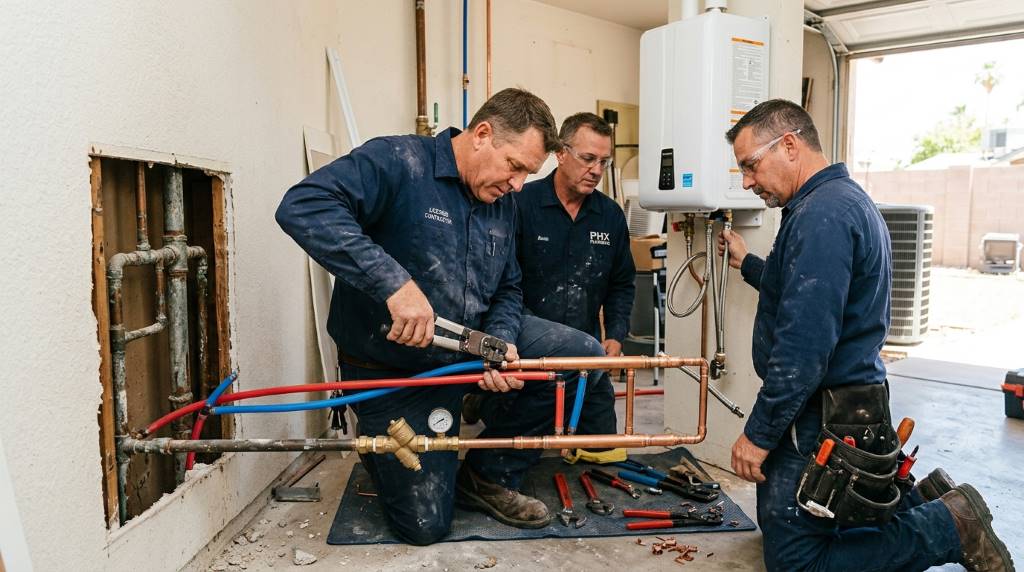

Phoenix homeowners continue to invest in plumbing upgrades because aging systems struggle with hard water, high summer temperatures, and increasing water demand. According to the United States Census Bureau, many homes in Phoenix were built before 1990, which means outdated plumbing materials remain common across the city. In addition, the Arizona Department of Water Resources reports that water conservation remains a major concern for local residents and contractors. Because of these factors, contractors often recommend replacing corroded lines, improving water efficiency, and modernizing fixtures during renovations. Many property owners also research topics like pvc to galvanized pipe connection when planning partial upgrades in older homes.
Why Plumbing Upgrades Matter in Older Phoenix Homes
Older homes in Phoenix often contain galvanized steel pipes, aging sewer lines, and outdated plumbing layouts that no longer meet modern household needs. Over time, these systems develop corrosion, leaks, and reduced water pressure that affect daily comfort and increase repair costs. Contractors usually inspect older systems carefully before recommending targeted upgrades that improve efficiency and reliability. Moreover, Phoenix’s hard water causes mineral buildup inside pipes, which shortens plumbing lifespan significantly. Homeowners who delay upgrades often experience recurring leaks and expensive emergency repairs during peak summer months.
Contractors frequently explain that outdated plumbing systems waste water and raise monthly utility bills. In many neighborhoods, aging pipes struggle to support modern appliances such as tankless water heaters and high-efficiency washing machines. Therefore, replacing old piping materials helps homeowners improve performance while reducing long-term maintenance expenses. Professional plumbers also recommend upgrades that support future remodeling projects or home additions. As a result, modern plumbing systems increase property value while improving household safety and convenience.
Common Plumbing Problems Found in Older Phoenix Properties
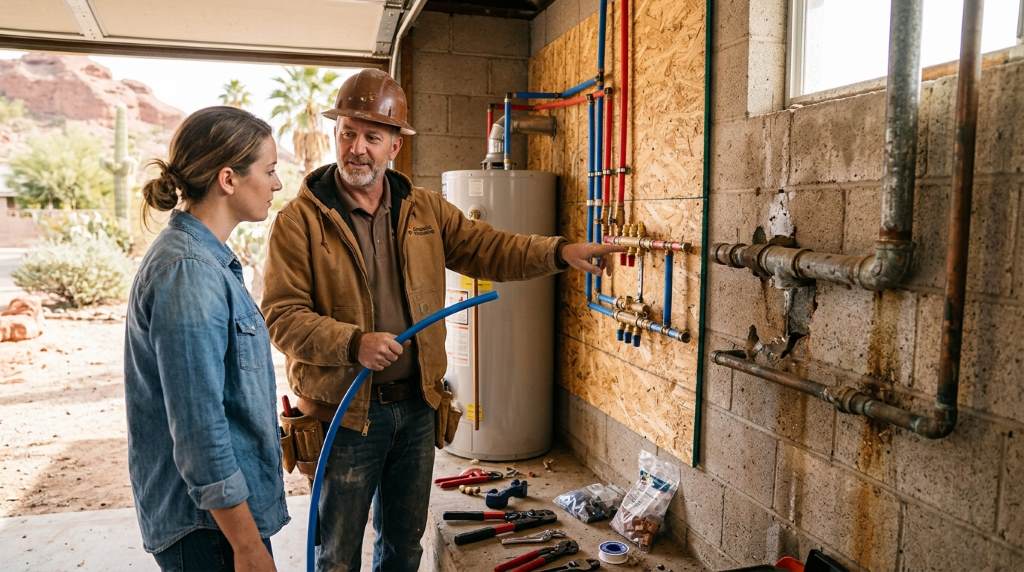
Corroded Galvanized Pipes
Galvanized pipes remain one of the biggest plumbing concerns in older Phoenix homes because corrosion develops inside the pipe walls over time. This buildup restricts water flow and often produces discolored water with a metallic taste. Contractors typically recommend replacing galvanized pipes with copper or PEX piping to improve water quality and pressure. Furthermore, corroded pipes can suddenly burst during temperature changes or pressure fluctuations. Homeowners who replace these systems early usually avoid major structural water damage later.
Slab Leaks and Underground Pipe Damage
Phoenix contractors regularly deal with slab leaks caused by aging underground copper pipes and shifting desert soil conditions. Even small leaks beneath a foundation can increase water bills and weaken structural integrity over time. Therefore, plumbers often use electronic leak detection equipment before planning a complete plumbing upgrade. Many contractors suggest rerouting water lines through walls or ceilings instead of reinstalling pipes beneath concrete slabs. This approach simplifies future repairs and reduces the risk of additional foundation issues.
Hard Water Damage
Hard water affects nearly every plumbing system in Phoenix because mineral-heavy water leaves deposits inside pipes and fixtures. Contractors frequently install water softeners during plumbing upgrades to extend the life of appliances and piping systems. In addition, mineral buildup reduces the efficiency of water heaters and creates uneven water pressure throughout the home. Plumbing professionals often recommend regular maintenance along with upgraded piping materials that resist scale accumulation. Consequently, homeowners experience fewer plumbing issues and lower appliance replacement costs.
Best Pipe Materials Contractors Recommend
PEX Piping for Modern Flexibility
Many Phoenix contractors prefer PEX piping because it handles temperature changes well and resists corrosion caused by hard water. PEX installation also costs less than copper in many remodeling projects because plumbers can complete installations faster. Additionally, flexible PEX tubing works well in tight spaces and reduces the number of fittings needed throughout the system. Contractors often recommend this material for whole-home repiping projects in older properties. Homeowners appreciate the long-term durability and lower maintenance requirements associated with PEX systems.
Copper Pipes for Long-Term Durability
Copper remains a trusted option for homeowners who want highly durable and long-lasting plumbing systems. Contractors often recommend copper for properties where homeowners prioritize reliability and resale value. Although copper costs more upfront, many plumbers consider it a premium material that performs well in demanding conditions. Moreover, copper resists bacteria growth and maintains excellent water quality over time. However, contractors usually inspect local water conditions carefully before recommending copper installations because extreme hard water may reduce its lifespan.
PVC and ABS for Drainage Systems
Contractors commonly recommend PVC and ABS piping for drain and sewer line replacements because these materials resist corrosion and root intrusion effectively. Older cast iron drain systems often crack or clog after decades of use, especially in homes built before modern plumbing standards existed. Therefore, replacing outdated drain lines improves wastewater flow and reduces recurring sewer problems. PVC materials also offer lower installation costs and simplified maintenance compared to older pipe systems. As a result, many Phoenix homeowners choose these materials during complete plumbing renovations.
Water Heater Upgrades Contractors Suggest
Tankless Water Heaters
Tankless water heaters continue to gain popularity in Phoenix because they provide hot water on demand while reducing energy consumption. Contractors frequently recommend these systems for families seeking improved efficiency and lower utility costs. Since Phoenix temperatures remain warm for much of the year, tankless systems often perform very efficiently in local homes. Additionally, these units occupy less space and last longer than traditional storage tank heaters. Homeowners who upgrade to tankless systems often enjoy consistent hot water without worrying about running out during busy mornings.
High-Efficiency Storage Water Heaters
Some households still prefer traditional storage water heaters because they cost less initially and work well for larger families. Contractors typically recommend high-efficiency models with improved insulation and energy-saving features. Furthermore, newer storage systems heat water faster and maintain more stable temperatures than older units. Professional plumbers often pair these upgrades with expansion tanks and pressure regulators for added protection. Consequently, homeowners gain better performance while reducing the risk of premature system failure.
Water Conservation Upgrades for Phoenix Homes
Water conservation remains extremely important in Phoenix because desert conditions place ongoing pressure on local water supplies. Contractors often recommend low-flow fixtures that reduce water usage without sacrificing performance or comfort. Modern faucets, showerheads, and toilets use significantly less water than older models found in aging homes. In addition, many upgrades qualify homeowners for local utility rebates or energy-saving incentives. Therefore, plumbing improvements can lower both water bills and environmental impact over time.
Smart plumbing technology also helps Phoenix residents monitor water usage more effectively. Contractors frequently install leak detection systems that send mobile alerts when unusual water flow occurs inside the home. Moreover, smart shutoff valves automatically stop water flow during major leaks to prevent costly damage. These systems provide peace of mind for homeowners who travel often or manage rental properties remotely. As a result, smart plumbing upgrades continue to grow in popularity across Phoenix neighborhoods.
Sewer Line Replacement Recommendations
Older sewer lines often create serious plumbing issues because tree roots, corrosion, and shifting soil conditions damage underground piping over time. Contractors commonly recommend sewer camera inspections before beginning large plumbing renovation projects. This technology helps identify blockages, cracks, and pipe collapse without unnecessary excavation. Additionally, trenchless sewer repair methods allow plumbers to replace damaged lines with minimal disruption to landscaping and driveways. Homeowners benefit from faster project completion and lower restoration costs after installation.
Contractors also advise homeowners to avoid temporary fixes for recurring sewer backups because underlying pipe damage usually worsens over time. Replacing deteriorated sewer lines improves drainage performance while protecting indoor air quality and sanitation. Many Phoenix homes still contain clay or cast iron sewer pipes that no longer meet modern durability standards. Therefore, updated sewer systems often become essential during major home renovations or property sales. Buyers and inspectors increasingly expect modern sewer infrastructure in competitive real estate markets.
Plumbing Fixture Upgrades Contractors Recommend
Modern plumbing fixtures improve both functionality and visual appeal in Phoenix homes undergoing remodeling projects. Contractors often recommend replacing outdated faucets, sinks, and shower systems during larger plumbing upgrades to maximize efficiency and consistency. Furthermore, newer fixtures resist mineral buildup better than older designs commonly found in aging homes. Many homeowners choose brushed nickel or matte black finishes because they complement modern desert-style interiors. Consequently, upgraded fixtures improve daily convenience while increasing overall property value.
Touchless faucets and smart shower systems also continue to gain popularity among Phoenix homeowners seeking modern convenience. Contractors install these features frequently in kitchens, bathrooms, and luxury remodels throughout the area. In addition, water-efficient fixtures help households meet conservation goals without sacrificing performance. Many modern toilets now use dual-flush technology that reduces unnecessary water consumption significantly. Therefore, plumbing fixture upgrades provide both environmental and financial benefits over the long term.
How Contractors Plan Whole-Home Repiping Projects
Professional contractors begin whole-home repiping projects with detailed plumbing inspections that identify weak points and future risks within the system. They evaluate water pressure, pipe condition, fixture performance, and drainage efficiency before recommending specific upgrades. Moreover, contractors create phased installation plans that minimize disruption to household routines during construction. Many plumbers complete repiping projects section by section so families can continue using essential plumbing fixtures throughout the process. This organized approach reduces stress and improves project efficiency for homeowners.
Experienced contractors also help homeowners choose materials based on budget, long-term goals, and local water conditions. Some households prioritize affordability, while others focus on maximum durability and resale value. Therefore, contractors explain the pros and cons of each piping material carefully before installation begins. Clear communication helps homeowners make informed decisions about warranties, maintenance requirements, and future upgrades. As a result, successful repiping projects often provide decades of improved plumbing performance and reliability.
Related:
How to Replace a Cracked Shower Tile (DIY)
How to Choose Between Submersible and External Aquarium Pumps
Choosing the Right Plumbing Contractor in Phoenix
Selecting the right contractor plays a major role in the success of any plumbing upgrade project. Homeowners should look for licensed and insured professionals with experience handling older Phoenix plumbing systems. Additionally, contractors familiar with local building codes and desert climate conditions often deliver more reliable long-term solutions. Reading customer reviews and requesting detailed project estimates also helps homeowners compare service quality effectively. Therefore, careful contractor selection reduces the risk of costly installation mistakes and future plumbing issues.
Many reputable contractors offer warranties on both labor and materials for major plumbing upgrades. Homeowners should ask detailed questions about timelines, permits, inspection requirements, and cleanup procedures before signing contracts. Furthermore, experienced plumbers usually provide clear recommendations instead of pushing unnecessary upgrades. Transparent communication helps homeowners stay within budget while addressing the most important plumbing concerns first. Consequently, working with qualified professionals ensures smoother renovations and more dependable plumbing systems.
Conclusion
Old-to-new plumbing upgrades in Phoenix require careful planning because desert conditions, hard water, and aging infrastructure create unique challenges for homeowners. Contractors consistently recommend replacing outdated pipes, upgrading water heaters, improving water efficiency, and modernizing sewer systems for better long-term performance. These improvements reduce maintenance costs, improve water quality, and increase overall property value significantly. Moreover, modern plumbing systems provide better reliability and energy efficiency for growing households. If your home still relies on aging plumbing materials, contact a licensed Phoenix plumbing contractor today to schedule a professional inspection and upgrade consultation.
FAQs
How long does a whole-home repiping project usually take?
Most whole-home repiping projects in Phoenix take between three and seven days depending on home size and complexity.
What pipe material do contractors recommend most in Phoenix?
Many contractors recommend PEX piping because it resists corrosion and performs well in hard water conditions.
Are tankless water heaters worth installing in Phoenix?
Yes, tankless water heaters work efficiently in Phoenix and often reduce long-term energy costs.
How can homeowners identify old galvanized pipes?
Galvanized pipes usually appear dull gray and often produce low water pressure or rusty water.
Do plumbing upgrades increase home value?
Yes, modern plumbing systems improve property value and attract buyers looking for updated infrastructure.