
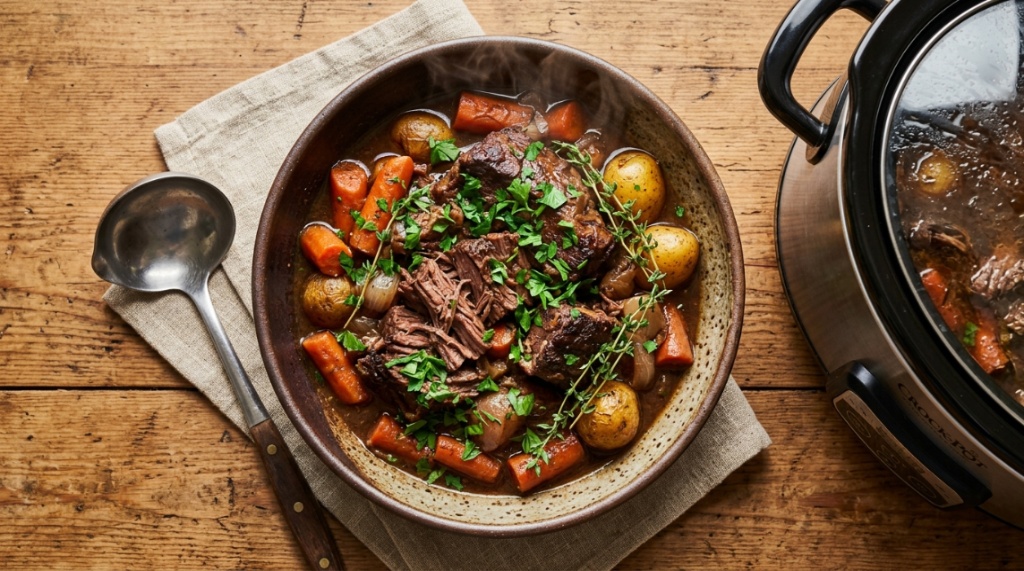

You come home after a long day, the kids are hungry, and the last thing you want to do is spend an hour chopping and stirring. The fridge is full, but time is empty. This is the exact moment a slow cooker becomes your best friend. An affordable slow cooker family meals solution isn’t just about saving money—it’s about reclaiming your evenings while still putting a hot, homemade dinner on the table. The problem is that the market is flooded with cheap units that scorch food or cook unevenly. You need a budget-friendly option that actually works, holds enough food, and won’t die after three months. This guide cuts through the noise to help you pick the perfect model for your family’s needs, your budget, and your sanity.
What Size Slow Cooker Do You Need for a Family?
A 6-quart slow cooker is the standard sweet spot for families of four to five. If you have two adults and two kids who eat moderate portions, a 5-quart unit will work. For larger families or meal preppers, an 8-quart model gives you room for roasts and leftovers.
Size matters more than you think. Too small, and you’re overcrowding the pot, which leads to undercooked food and liquid spilling over the lid. Too large, and you dry out smaller batches. Think of your slow cooker like a car: you don’t buy a minivan if you have one toddler, but you also don’t buy a two-seater if you have a soccer team. For a typical family, the 6-quart offers flexibility. You can fit a whole chicken, a large batch of chili, or a pork shoulder. If you plan to cook once and eat twice (a great habit for busy parents), go with 7 or 8 quarts. Most affordable slow cooker family meals options land in this range because manufacturers know that is what real households need.
Checking Your Household Size
- 1-2 people: 3 to 4 quarts
- 3-4 people: 5 to 6 quarts
- 5+ people or meal prep: 7 to 8 quarts
Do not overthink this. If you are unsure, buy the larger size. You can always cook less food in a big pot, but you cannot stretch a small pot to feed unexpected guests.
Which Materials Make a Slow Cooker Last Longer?
The best affordable slow cookers use a heavy stoneware ceramic insert and a cast aluminum heating base. These materials distribute heat evenly and resist cracking, unlike cheap thin metal inserts that create hot spots.
When you are shopping on a budget, the materials are the first place manufacturers cut corners. A flimsy metal insert will scratch easily and can react with acidic ingredients like tomatoes or vinegar, giving your food a metallic taste. The stoneware insert is non-reactive and holds heat better, which means you can keep food warm without burning it. Look for an insert that feels heavy when you lift it. If it feels like a cheap baking pan, put it back. The lid should also be tight-fitting glass so you can see the food without lifting the lid and releasing heat. Avoid units with plastic lids; they warp over time and never seal properly.
How to Choose Between Manual and Programmable Controls
A programmable slow cooker with a timer and auto-warm function is worth the extra ten dollars because it prevents overcooking. Manual models (just a dial for Low, High, and Off) are cheaper but require you to be home to turn them off.
Here is the reality: life gets messy. Meetings run long, traffic backs up, and kids have meltdowns. With a manual cooker, a 6-hour recipe on Low turns into an 8-hour disaster of burnt edges. Programmable models let you set a specific cook time, and then they switch automatically to “Warm.” This feature is not a luxury; it is a safety net for busy families. Some affordable models now include digital displays with countdown timers, which help you plan the rest of your evening. If you are the type of person who forgets to start dinner until 4 PM, look for a model with a delayed start function, though this is harder to find at rock-bottom prices.
Key Control Features to Prioritize
- Auto-Warm: Keeps food safe (above 140°F) without overcooking.
- Countdown Timer: Shows exactly how much time is left.
- High/Low Settings: Standard for all recipes.
- Delay Start: Handy but optional for budget units.
Can a Cheap Slow Cooker Cook a Whole Chicken Evenly?
Yes, a cheap slow cooker can cook a whole chicken evenly if it is 6 quarts or larger and has a good seal. The key is to use the right cooking method—truss the bird, cook on Low, and use a meat thermometer.
Many budget shoppers assume that you must spend a lot to cook a whole chicken, but that is false. The biggest issue with inexpensive models is that the heating element may only wrap around the bottom half of the pot. This can cause the chicken’s bottom to overcook before the breast hits safe temperature. To solve this, flip the chicken breast-side down for the first half of cooking, then flip it breast-side up for the last hour. Also, do not add too much liquid. A chicken releases its own juices, and too much water creates a steamed, rubbery texture rather than a tender, falling-off-the-bone result. With a little technique, a $40 slow cooker can produce a chicken that rivals a $200 model.
How Much Should You Spend on a Family Slow Cooker?
You can find a reliable, family-sized slow cooker for $35 to $60. Spending more than $100 is unnecessary unless you want advanced features like Wi-Fi or pressure cooking integration.
The sweet spot for value is between $40 and $50. At this price, you get a 6-quart stoneware insert, a programmable timer, and a three-year warranty from reputable brands like Hamilton Beach, Crock-Pot, or Black+Decker. Below $30, you are typically looking at smaller sizes or manual controls that lack the auto-warm feature. Above $80, you are paying for brand prestige or gimmicks like app connectivity. For a busy parent, the $45 programmable model is often the best purchase you can make. It is cheap enough to replace if it breaks, but robust enough to last several years with proper care.
Price vs. Features Breakdown
| Price Range | Typical Size | Key Features | Best For |
|---|---|---|---|
| Under $30 | 3–4 quarts | Manual dial, basic lid | Single person or couple |
| $35–$60 | 6–7 quarts | Programmable timer, auto-warm, stoneware insert | Family of 4–5 |
| $60–$100 | 6–8 quarts | Digital display, delay start, sometimes searing function | Frequent meal preppers |
| Over $100 | 8+ quarts | Wi-Fi, multi-cooker (pressure/slow/sauté), premium build | Tech enthusiasts or large families |
What Is the Easiest Slow Cooker to Clean After a Family Meal?
The easiest slow cooker to clean has a removable stoneware insert and a non-stick interior coating. Dishwasher-safe parts are not just convenient—they save you ten minutes of scrubbing every night.
After a heavy meal of pot roast or cheesy potatoes, scrubbing a caked-on insert is a pain. Look for models where the ceramic pot lifts right out of the heating base. Most affordable units now offer this, but always check the product description. Some very cheap cookers have a fixed interior that cannot be removed, making cleaning a nightmare. Non-stick coatings are helpful, but they can scratch if you use metal utensils. Always use silicone or wooden spoons. Also, pay attention to the lid. Glass lids with a silicone gasket ring are easier to clean than all-plastic lids that absorb odors and stains. A quick soak with hot soapy water usually does the trick, but the dishwasher-safe feature is a game-changer for busy weeknights.
How to Avoid Buying a Slow Cooker That Overcooks or Burns Food
Avoid slow cookers with a single bottom heating element. Look for models with heating elements that wrap around the sides of the pot. This prevents hot spots and burning on the bottom.
Burning is the number one complaint about budget slow cookers. The cheap ones heat only from the bottom, so the food at the bottom gets blasted while the top stays just warm. This is especially problematic with thick sauces or dairy-heavy recipes. To avoid this, do not fill the cooker more than two-thirds full, and avoid lifting the lid too often—each lift costs about 20 minutes of cooking time. If you already own a model that burns, try using a liner (like a slow cooker liner bag) to prevent direct contact, or add a little more liquid than the recipe calls for. For new purchases, read reviews specifically searching for the term “temps run high.” Some off-brands cook at a higher temperature than standard, which throws off recipe times.
Quick Fixes for Uneven Cooking
- Stir the contents once halfway through (if you are home).
- Cut vegetables smaller than meat so they cook simultaneously.
- Layer dense root vegetables at the bottom where heat is strongest.
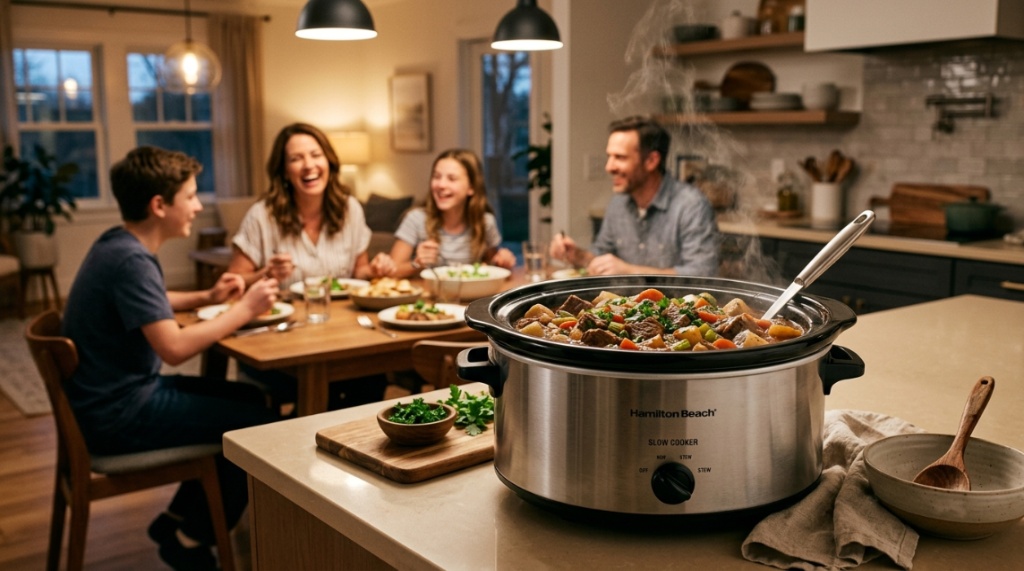
Why Is a Slow Cooker Better Than an Instant Pot for Easy Family Dinners?
A slow cooker is better for hands-off cooking where you want to “set it and forget it” for 6 to 8 hours. An Instant Pot is faster but requires more active attention and can pressure-cook food to a mushy texture if you are not careful.
The debate between slow cookers and multi-cookers like the Instant Pot is heated. For busy families, the slow cooker wins on sheer convenience. You prep in the morning, turn it on, and come home to a finished meal. There is no risk of forgetting to close a steam valve or dealing with a scary pressure release. That said, an Instant Pot is fantastic if you forgot to thaw the chicken or want to make beans in an hour. But for a true “easy family dinner” where you want tender meat and developed flavors without hovering over the stove, a traditional slow cooker is the simpler, cheaper choice. Many affordable models now offer a “Sauté” function, bridging the gap without the complexity of pressure cooking.
Should You Buy a Slow Cooker with a Lid Lock for Traveling?
Only buy a slow cooker with a lid lock if you plan to transport it to potlucks or family gatherings. For everyday home use, a standard glass lid with a tight seal is better because it allows steam to escape properly.
Lid locks are a niche feature. They are great if you need to bring a hot dish to a holiday party without spilling in the car. However, for daily use, a locked lid can trap too much moisture, making your recipes watery. The steam needs to condense on the glass and drip back down, but a locked lid can cause the temperature to rise and create a soggy mess. Most affordable slow cookers do not include a lid lock, and that is fine. If you travel often with food, buy a separate carrier bag or use heavy-duty aluminum foil under the lid as a seal. It works just as well and costs nothing.
How to Test Your Slow Cooker Before the First Family Meal
Fill the slow cooker halfway with water, set it to Low, and let it run for four hours. Check the water temperature with an instant-read thermometer. It should be between 185°F and 205°F. If it is boiling, the unit runs hot and will burn food.
This simple water test saves you from ruining a $20 roast. Do it as soon as you unbox the cooker. If the water temperature is below 180°F, the unit runs cold and food will take longer to cook. If it is boiling aggressively (above 210°F), you know you need to adjust your recipes by cooking on Low exclusively or reducing the time. This test is especially important for off-brand units where quality control is inconsistent. It takes ten minutes of active work and saves weeks of frustration. Mark the results on a sticky note taped to the base so you always remember.
What Accessories Make an Affordable Slow Cooker More Useful?
A slow cooker cookbook, reusable silicone liners, and a meat thermometer are the three accessories that will make your cheap slow cooker perform like a premium model.
You do not need to spend much on accessories. Silicone liners replace the disposable plastic bags and make cleanup instant. A good cookbook (or a free online resource) teaches you the specific timing and liquid ratios for slow cooking, which differ from stovetop cooking. The meat thermometer is the most underrated tool. Because slow cookers vary in temperature, guessing doneness leads to dry meat. A $10 digital thermometer ensures your chicken hits 165°F and your pork reaches 200°F for shredding. Do not buy expensive slow cooker-specific cookware; standard kitchen tools work fine.
Finding the right appliance doesn’t just save you counter space; it transforms how your kitchen functions. While a great crockpot is a game-changer for busy weeknights, it is just one of the Essential Kitchen Tools every home cook needs to streamline meal prep.
Worthwhile Under-$20 Accessories
- Silicone slow cooker liner (reusable, dishwasher safe).
- Digital instant-read meat thermometer.
- Slow cooker recipe book focused on family meals.
- Trivet or rack for cooking separate items in the pot.
Frequently Asked Questions
Can I sear meat directly in a cheap slow cooker?
Only if the unit has a dedicated Sauté or Browning function. Most basic affordable slow cookers do not get hot enough for proper searing, and the non-stick coating can degrade at high temperatures. Always sear meat in a separate skillet on the stove.
How long do affordable slow cookers typically last?
With proper care, a $40 slow cooker lasts 3 to 5 years. The heating element is usually the first thing to fail. Avoid thermal shock (placing a hot insert into cold water) to extend its life.
Is it safe to leave a slow cooker on while I am at work?
Yes, modern slow cookers are designed for unattended use, provided they are on a stable, heat-resistant surface and away from curtains or paper. Programmable models with auto-warm are the safest choice for this.
Can I use a cheap slow cooker for yogurt or bread?
Yes, but it is tricky. Yogurt requires maintaining a steady temperature around 110°F, and most basic models run too hot. Bread works but can have a pale, soggy crust. These uses are better suited to a multi-cooker.
Which brand is most reliable for budget slow cookers?
Hamilton Beach and Crock-Pot are the most reliable in the $35–$55 range. They have been making these appliances for decades and have the best replacement parts availability.
Do I need to add liquid to every recipe?
Generally, yes. Slow cookers rely on steam to tenderize food. Add at least ½ cup of liquid (broth, water, sauce) unless the ingredients are very moist, like tomatoes or onions.
Can I open the lid to stir while cooking?
You can, but avoid it. Each time you lift the lid, you release heat and add 20 to 30 minutes of cooking time. Stir only if the recipe specifically calls for it, and do it quickly.
Conclusion
An affordable slow cooker transforms chaotic weeknights into peaceful, predictable dinner hours. You do not need a $200 appliance to feed your family well. Focus on size (6 quarts or larger), removable stoneware, and a programmable timer. Avoid the cheapest models with flimsy metal inserts or fixed lids, and run a simple water test before your first real cookout. With the right unit—even one under $50—you can make tender pot roasts, creamy soups, and pulled pork that tastes like it simmered all day in a professional kitchen. Stop overthinking and start cooking. Look at the specific recommendations for affordable slow cooker family meals and pick one that fits your counter space and your schedule. Your future self (and your hungry family) will thank you when dinner is waiting with zero effort and zero stress.